
By Solana Kline — [Honorary four-legger and lifelong dog-rescue advocate]
That Unmistakable Hollow Rattle
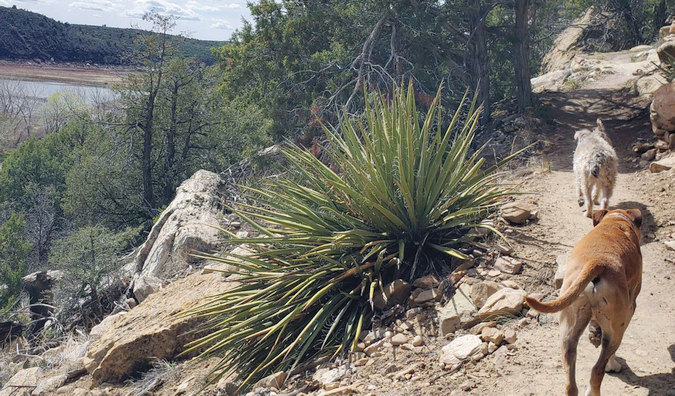
My brain instinctually clicks into triage mode—geolocate the sound and its proximity, assess the dogs’ locations and movement patterns, and strategize our safe extraction. I zero in on the source of the rattling.
Holy Guacamole! A six-foot rattlesnake fully coiled and at attention, midtrial, massive rodent halfway down her gullet.
I called out for each of the dogs to stop and stay. They were on either side of this mid-trail mama rattlesnake.
I tell you what, getting one pup to come and the other to stay simultaneously has been one of the great miracles of my time here on Earth. I tuned in my vision to spot any more snakes off-trail, ventured into the underbrush, and coaxed Mickey back down safely around the lunching serpent.
High on adrenaline, we sprinted back down to the truck, never to run that trail in the heat of the afternoon again.
It is that time of year again folks: The soil is warm, the rodents are scurrying, and the snakes are out to scoop them up. In Prescott, there are four native rattlesnake species: the Western Diamondback, Mohave, Black-tailed, and Arizona Black rattlesnakes. We also have a healthy bullsnake population that is not venomous but people confuse them with rattlers.
Bullsnake vs. Rattler?
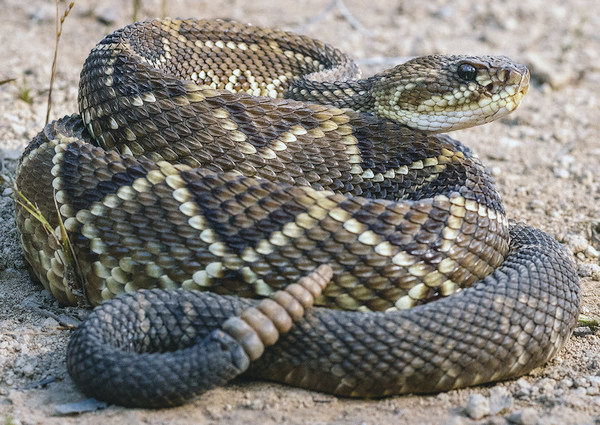
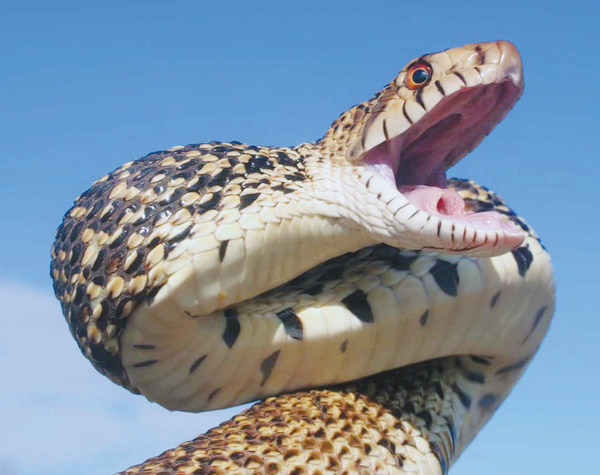
The evolutionary mimicry of bullsnakes has afforded them nearly identical protection mechanisms to those of rattlesnakes: Camouflaged skin coloring, ability to vibrate their tail against surrounding plant matter to rattle their tail, and the coil-strike posturing of rattlesnakes.
While they might seem nearly identical at quick glance, bullsnakes and rattlesnakes have some clear distinguishing factors. Bullsnakes have narrower heads than rattlers and do not have a rattle on their tail. Their tails taper, continuing their body coloring down to the tip. Importantly, bullsnakes are constrictors, and they are nonvenomous. If a bullsnake bites you, it will hurt a little but won’t have any lasting impacts.
Rattlesnakes have a wider and rounder head with a rattle on the end of their tail. Take note that the rattle grows as the snake does, so with a young rattler it may be difficult to see or count the rattles. To identify a small or young snake, instead of looking for rattles, look for the shape: does it taper into a point like a bullsnake? Or have a round bulbous end like a rattler?
Rattlesnakes are venomous. They use poison released from their front fangs to kill their prey. This evolutionary adaptation is not targeted at the random trail passerby. It is meant to make sure these snakes can eat up all those pesky mice at your house.
They’d Rather Not Bite Us
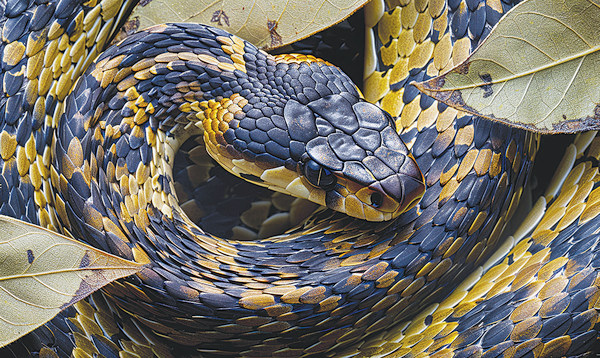
Believe it or not, like most other wildlife, it is not a snake’s preference to strike or attack. For wild animals, their survival depends on conserving energy stores. Rattlesnakes will choose to warn off predators or flee before expending the energy to attack. This is why rattlesnakes have their rattle tails, and bullsnakes mimic them. It’s how they let other forest/desert friends know they are there.
But knowing this doesn’t change the fact that our four-leggers are especially at risk to a rogue rattlesnake bite out in the yard, pasture, or up on the trails. Our furry friends don’t always mean harm to a backyard snake. Sometimes they are curious, sometimes they are just sprinting down the trail or across pasture. But, to a snake vulnerable on the ground, our horses and dogs can be considered a threat, and they may react. So, how can we keep the snakes and our four-leggers safe this Summer? Education is key.
Education to Keep the Pack Safe
As a human, we can first learn which territories and ecosystems are home to rattlers so that we can attune our senses to keeping an eye and ear out for them. Do a little internet sleuthing and call the local ranger stations to ask which snake species live in your area and at which elevations.
Before you head out, take a moment to attune your brain and senses to notice the shapes and sounds of rattlesnakes. When you aren’t prepared to see them, you get into a hairy situation like I did.
We can also take note of the time and temperature outside. Snakes are cold-blooded (ectothermic) and get moving when the ambient temperature outside is around sixty degrees or higher—although remember that ground temperature can be much warmer than the air due to the sun warming it or lack of winds to keep it cool. Take your morning pup-walks as early as you can when it is cooler outside.
Education for our pups is essential too. Teach the furry four-leggers basic emergency commands like: stop, stay, come, and go around. These are helpful for any potential emergency, whether on trail, road, parking lot, cliff-edge, or anytime.
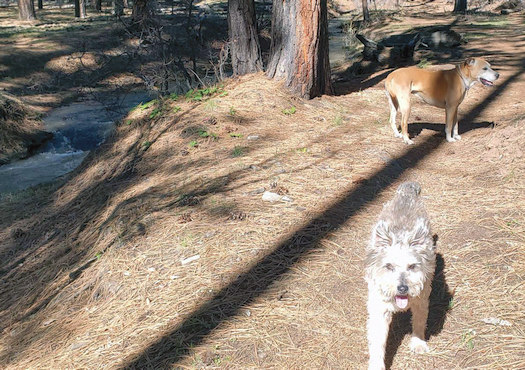
Snake avoidance training for the pups can be really useful too, depending on your pup of course. Betty did one course ten years ago and still won’t go near a snake shed. These courses teach dogs to recognize the smells, sights, and sounds of rattlesnakes as dangerous and to avoid them.
For horses, education is also key. But unlike with the dog avoidance training, horse education is focused on acclimating them to snakes instead of association avoidance. Familiarizing them with the sounds of rattlesnakes during daily routines will help keep them calm when snakes are present, so that we can lead them back or around a snake. This keeps the snakes calm, less likely to strike our equines.
What Can I Do to Keep My Yard Rattlesnake Free?
Even in rattlesnake country, it’s possible to have a relatively safe space for the pups outside. Remove any happy habitat for rattlers including rock or debris piles and water features. Keep the rodent population low to keep their food supply at a minimum. You can even build a snake-proof fence that makes it very difficult for snakes to climb over or under: one-quarter inch galvanized hardware cloth at least 36 inches high with the bottom buried six inches into the ground with top slanted out at a thirty-degree angle. There are even a few companies in Northern Arizona that will remove rattlers from your yard and take them to a healthy ecosystem away from your pups.
Don’t Kill the Mouse Hunters!
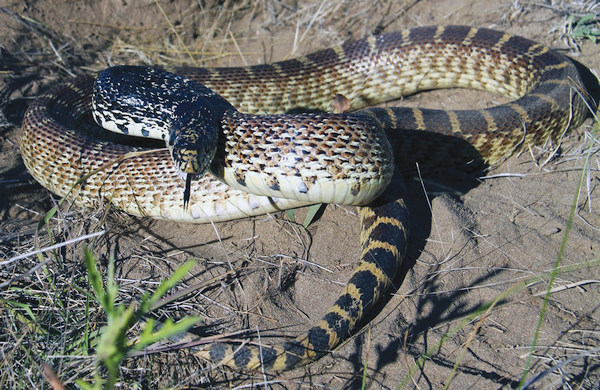
While they might not be your favorite snuggle-buddy, snakes are incredible ecosystem allies. You know all of those mice scurrying around the barn or basement? One adult bullsnake eats roughly 1,000 adult mice (gophers and rats too) over its lifetime. That’s one to three rodents per week. Not to mention all the smaller meals like baby mice, lizards, and frogs. Rattlesnakes, with slower metabolisms, eat less often, once every two to three weeks. But that is still about thirty rodents per year.
I get it. Rattlesnake bites and dogs or horses do not mix well. And, as the pack leaders, it is our job to keep our pack safe out there. The reality is, that with a bit of education and planning, we can live with these incredible mouse-hunters.
Until next time, happy tails and happy trails!
