Story and photos by Cheryl Hartz
Because Arizona is a treasury of Native American cultural sites, we tend to forget that such treasures exist in other states. Oregon, with it’s Marys Peak—all 924 acres of it—is a prime example in the Suislaw National Forest. For the Kalapuya people of the Willamette Valley, the peak is a sacred area. However, they call it Tcha-Ti-Man-Wi, the Spirit Mountain.
Immigrants who came long after the native people found a variety of uses for the mountain. But it seems the mountain did not always appreciate the intrusions. Capricious weather played a large role.
The earliest of these drove their grazing livestock to its meadows. Loggers transported their goods from the peak by local railroad in the early 1900s.
A gravity flow water system, constructed in 1905, continues to supply water through the Municipal Watershed from Marys Peak to the City of Corvallis below.
In 1959, the US Air Force built a radar station that was never used after a storm blew the antenna away. Rather than rebuild, the Cold War Continental Air Defense System abandoned the site. Contemporary radio communications towers currently serve from the summit, however.
In 1930, The Civilian Conservation Corps (CCC) built a fire lookout that stood until 1968. For a decade in the 40s and 50s, a ski club operated a tow rope on the summit. Unpredictable snow pack caused its abandonment.
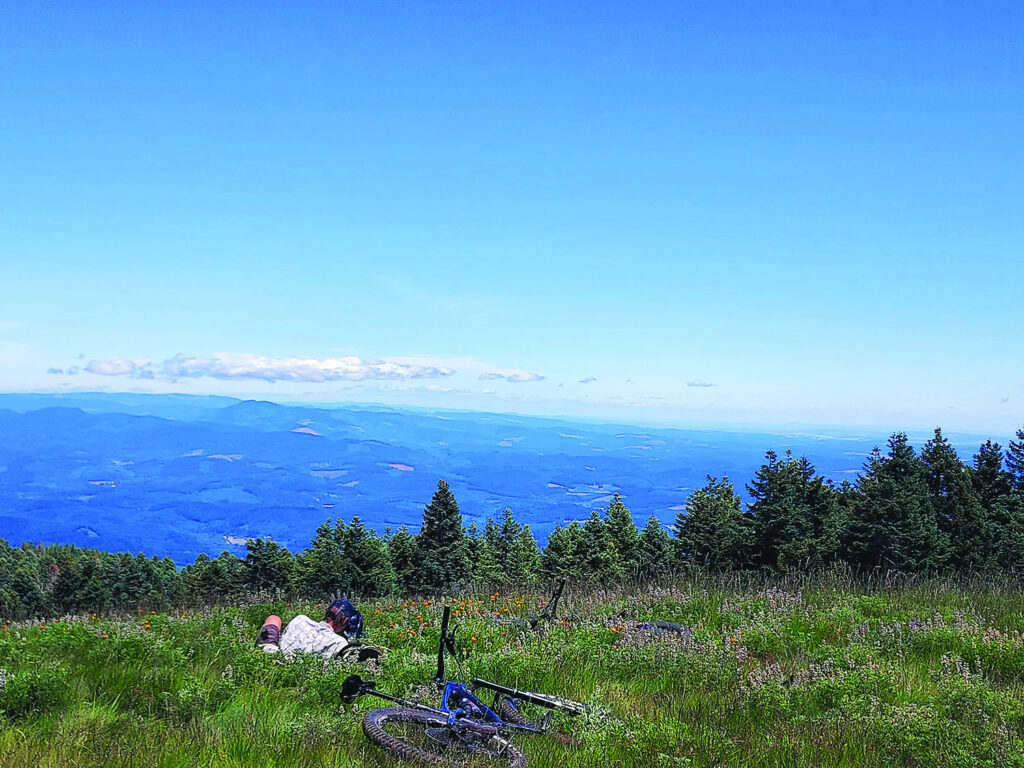
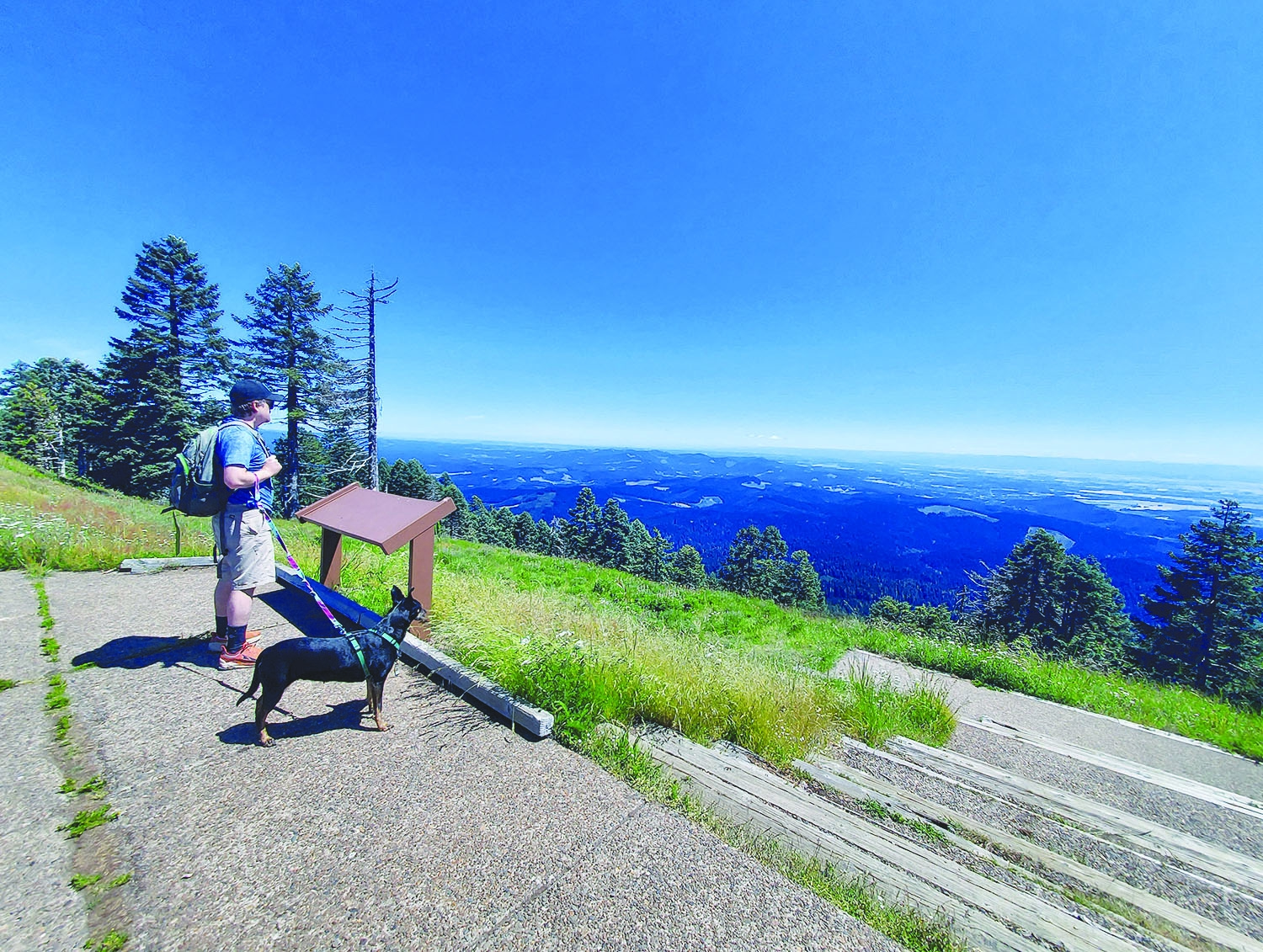
At 4,097 feet, Marys is one of Oregon’s highest peaks. In fact, it is the Coast Range’s highest point. Stunning views toward the Pacific Ocean 25 miles to the west and the Cascades to the northeast are available on clear days.
Mt. Hood, Mt. Jefferson, the Three Sisters and even Washington state’s Mt. Rainier nearly 250 miles away might be in sight. With nearly 13 miles of trails to explore, you might have a chance to see it all. But please stay on trails, as the mountain plants are fragile.
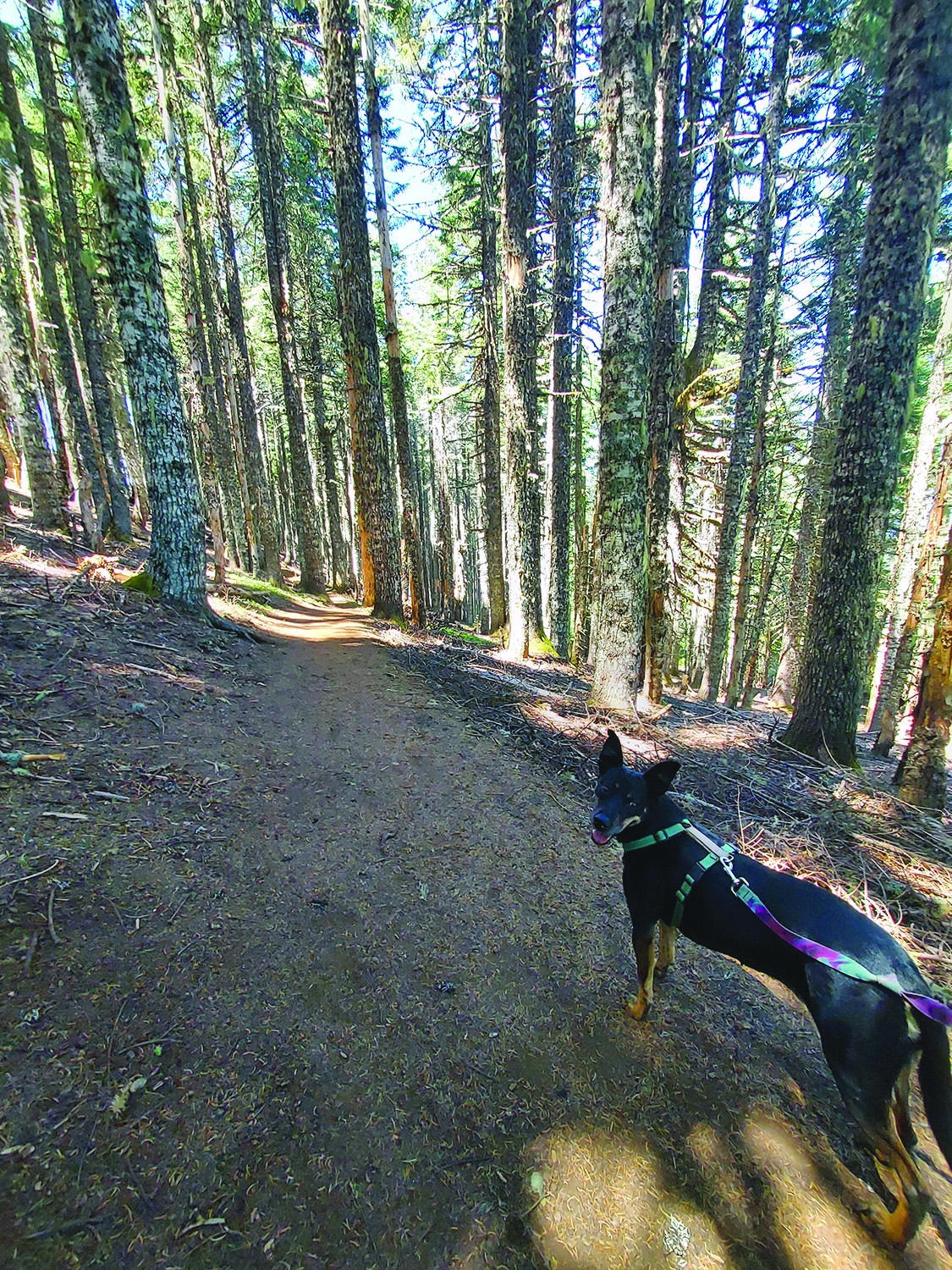
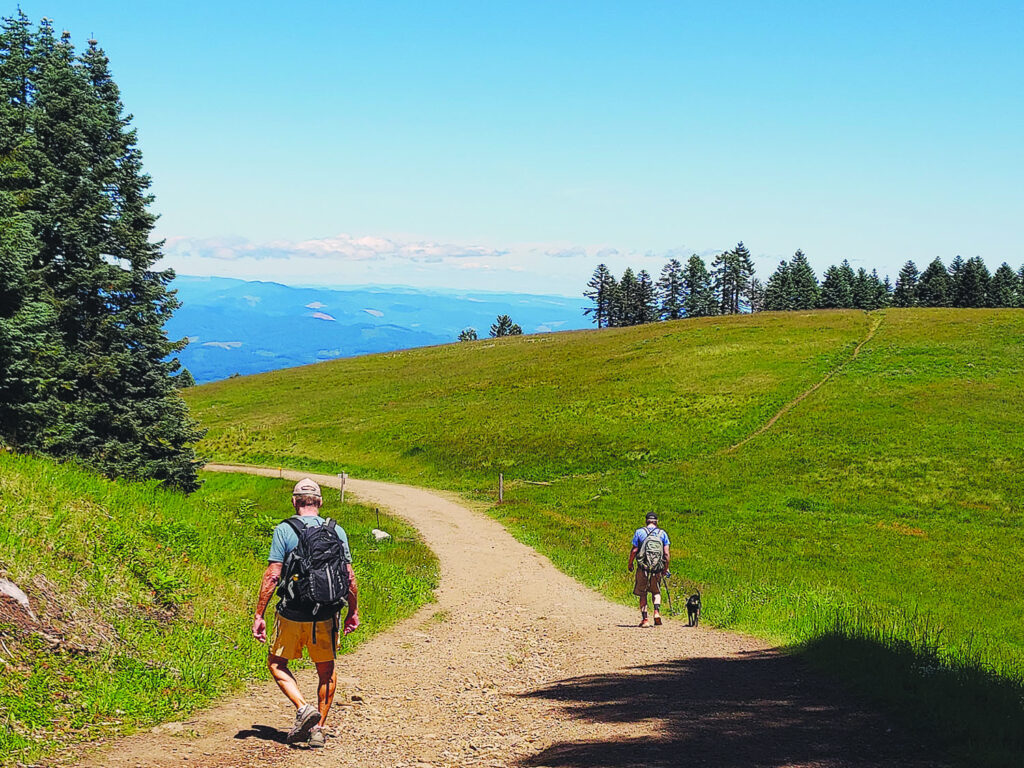
We had just such a clear day for our hike up the Summit Loop (1388) and East Ridge (1324) trails. The trail is a gravel road, but closed to motor vehicles, horses and pack stock.
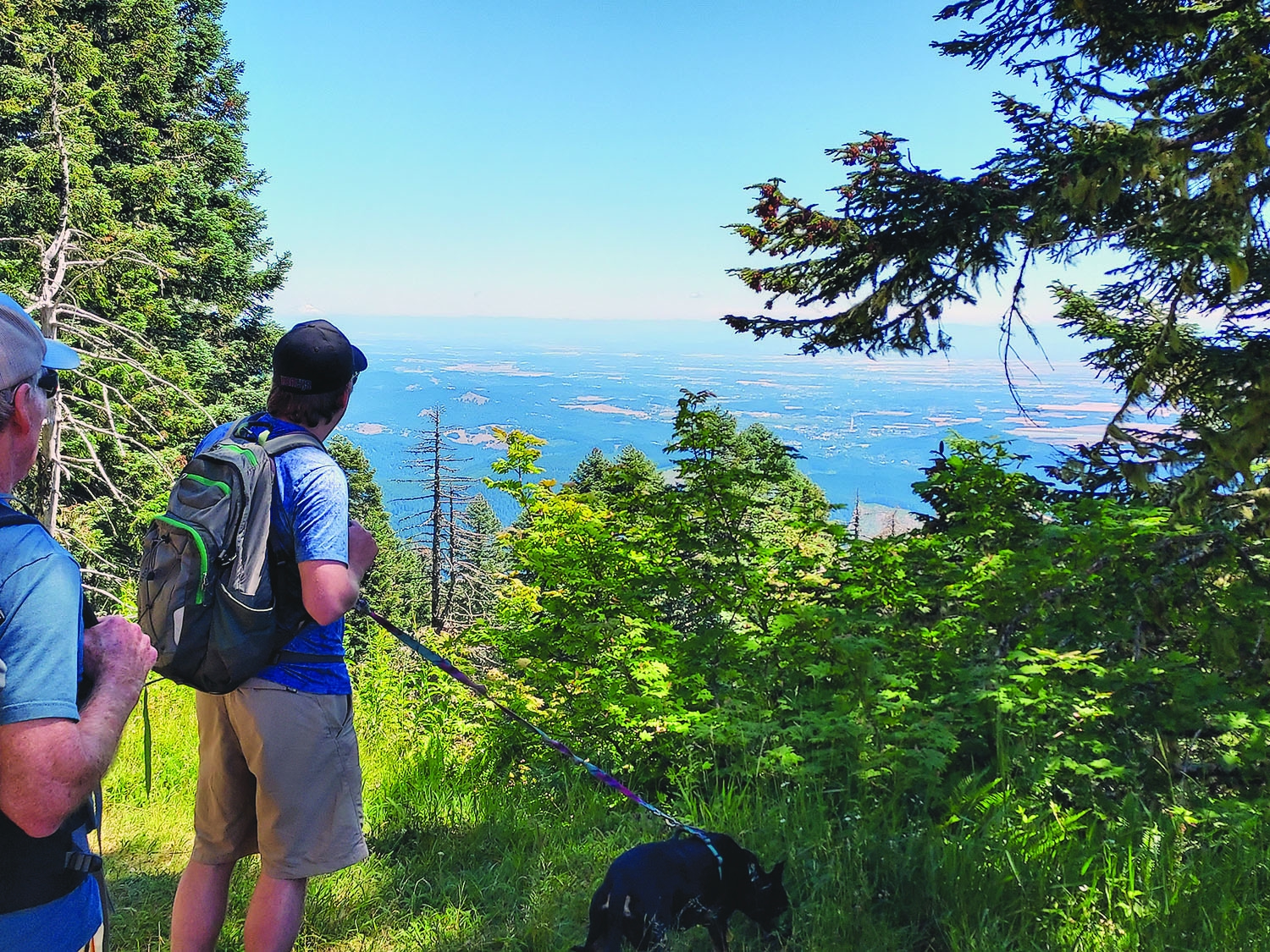
Dogs are welcome, and our Ducky enjoyed every bit of the 2-mile round trip hike.
A unique Noble fir forest exists on the mountain, which is a designated Scenic Botanical Area because of its meadows, abundant spring and summer wildflowers and a profusion of native plants and trees, including towering Douglas firs. Wildlife likes it here, too. Birders have recorded more than 70 species of avians.
Mary Lloyd, the first white woman to cross the Marys River, might be the inspiration for the common name. Although Marys Peak might be easier for most people to remember, personally, I find “Chateemanwee” more fun to say.
It’s also a fun place to hike.
Happy scenic hiking!