By Solana Kline {Honorary four-legger and avid dog-rescue advocate}
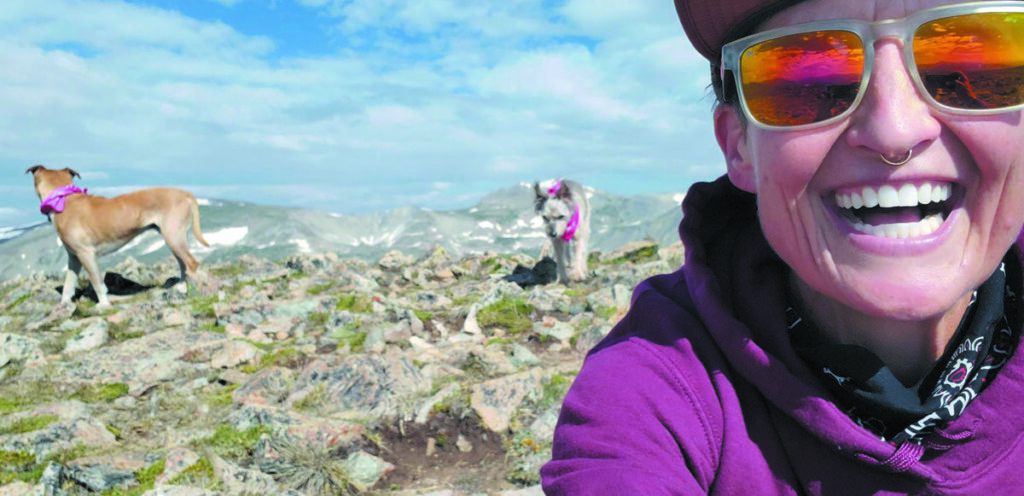
There is frost this morning. It’s July, but that late-October tang is in the air—that dry crisp that perks the pups and rustles the excitement for first snows and less haphazard sweating of summer.
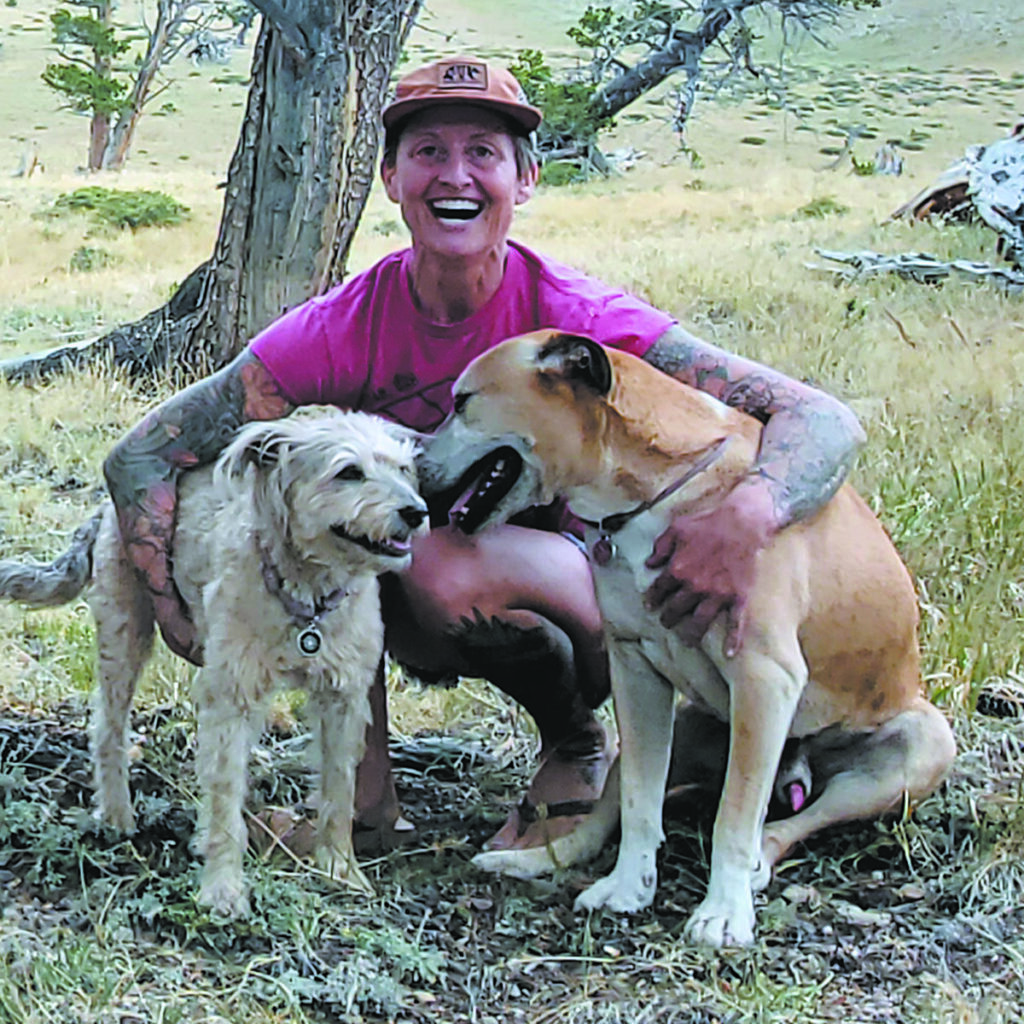
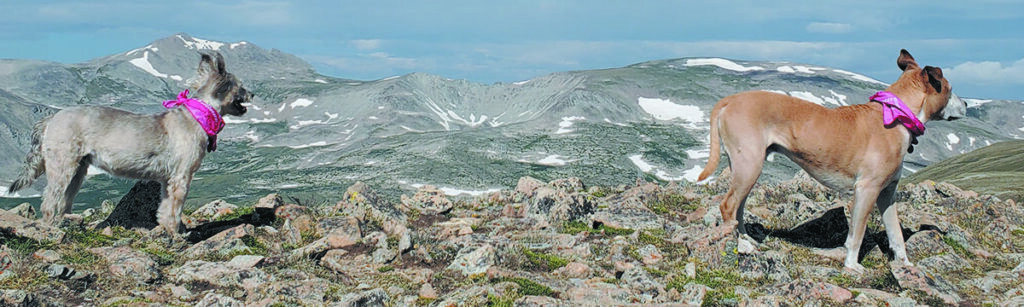
Mickey’s svelt pibble ears perk, his forehead scrunching into an infinite ripple of wrinkles. He holds his breath to focus his full attention on geolocating the pika over the next ridgeline. Betty, in true terrier fashion, is already hot on the trail and has morphed into her alter-ego: the little baby mountain goat, adeptly traversing the jagged and skittery granite shards, barely touching ground.
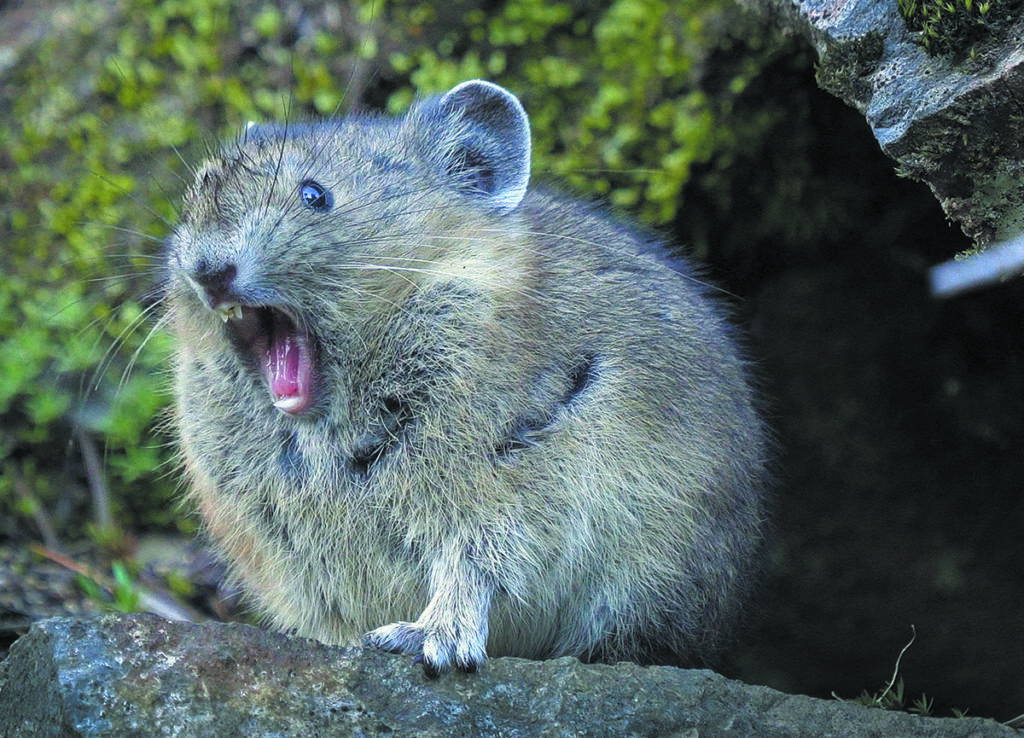
The chirps of pika and rock chucks have been the most irresistible for these hounds, and their warning calls echo across hill and dale in the high country. If you’ve never been privy to the screech of a pika, it is immense for their size—a high-pitched squeal unmistakable for any other animal.
Pika are in the rabbit family and are about the size of a softball. They live in and below the rocks and boulders between 8,000 and 13,000 feet in the Western United States. Adorable and fierce little buggers, they resemble an amalgam of bunny and mouse.
Much like the prairie dogs, they rise up on their squat hindquarters and scream out warning calls when they sense danger. From atop their talus perches, they can easily dart down into the strewn boulders for safety. The pups wear their bear bells to give the ground-dwellers far/fair warning. And, while I never condone dogs chasing wildlife, for the pups, this is the ultimate game of whack-a-mole, where the pika have the upper hand and truly seem to enjoy taunting the dogs, drawing them back and forth across the foreboding terrain.
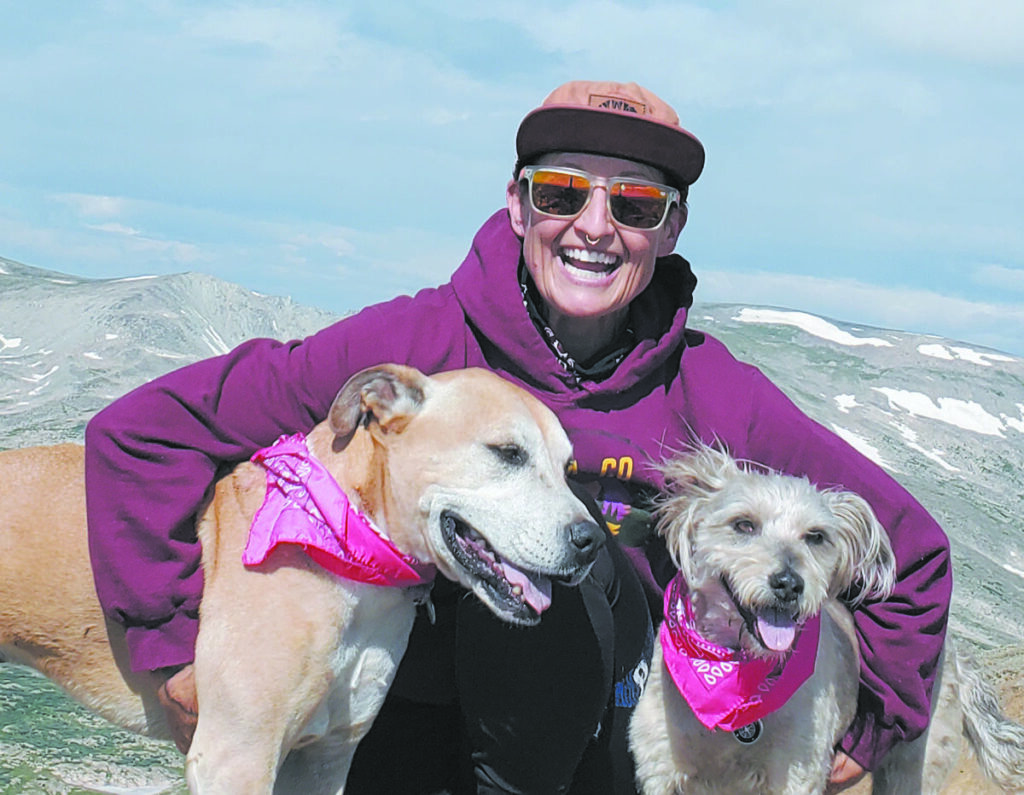
As my four-legged packmates sprint effortlessly across the plant-bare, toothy mountainside, I take stock of my own relative weakness and inefficiency as a two-legger.
Here we are at 12,500 feet, and my breath is short and stunted—telling me to take ‘er easy so that the miniscule amounts of oxygen can find their way into my blood. So, here I am, in slow motion while the furry wonders are leagues ahead on full charge.
What’s going on here? I can’t help but feel the lesser species, which of course, I already assumed…
Are the dogs really more adept and adapted physiologically to high altitude? The short answer is: sort of…
Extreme or sudden changes in altitude is difficult for all mammals, but with our varied physiologies, all species have a different bag of tricks to deal with it. When us humans go trapsing into higher altitudes we aren’t use to, our body’s immediate response is to breath faster and deeper in an attempt to bring more oxygen into our flailing humanoid systems. The more time we spend at altitude, our bodies respond by increasing red blood cell production—a complex process where the kidneys, having sensed less oxygen, produce EPO to signal our bone marrow to pump out more red blood cells that will transport more oxygen. And our muscles grow more capillaries (the tiny blood vessels that grow in tissue) for better oxygen delivery, and the amount of plasma in our blood decreases so that the hemoglobin (the protein that carts the oxygen around) can increase in our red blood cells.
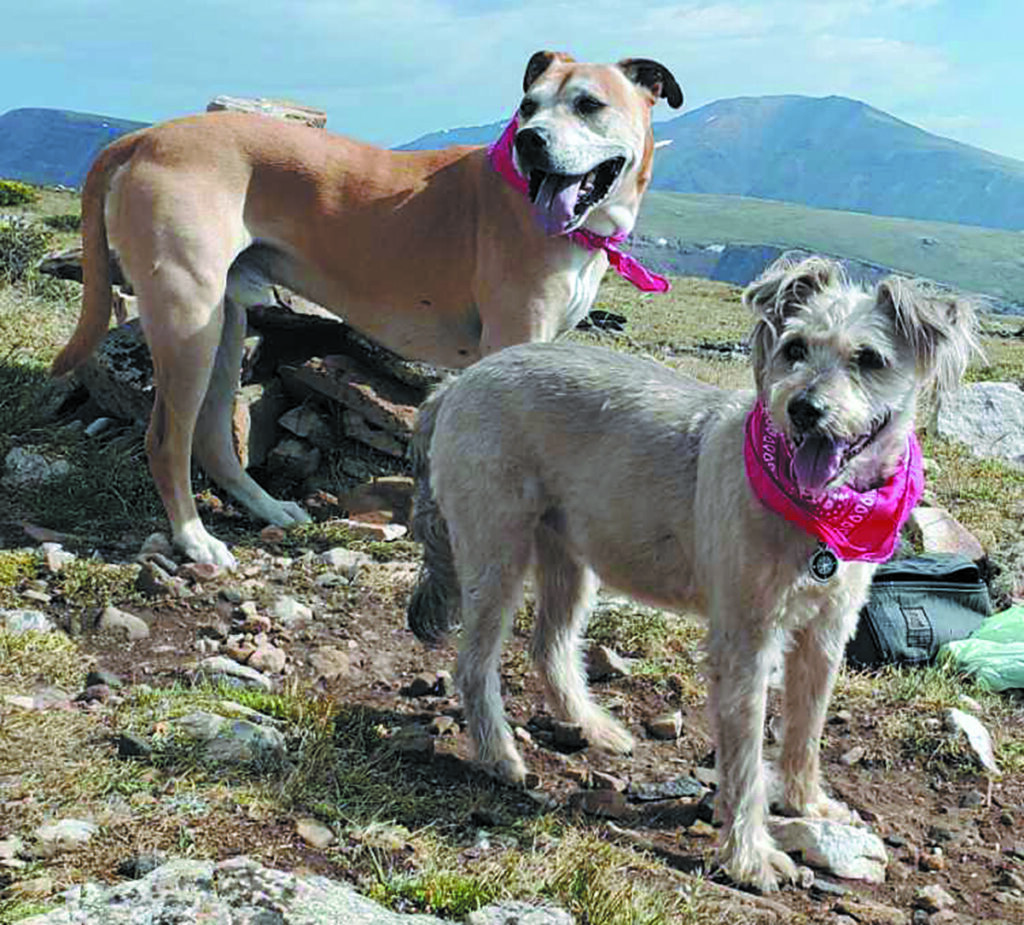
And what about our canine companions? What super powers do they have that keep them in top-gear while we loll behind at tractor pace?
Like humans, dogs also experience an immediate increase in breathing and heart rate to try and pull in as much oxygen from the thin air as possible. They can experience altitude sickness, with similar symptoms to people—like headaches, lethargy, intestinal distress, and dehydration. Dogs adapt slowly over time to eventually be efficient at any altitude, the same way that we do. And, just like us, they produce extra red blood cells and EPO. The key difference lies in their spleen.
The spleen is a curious little organ living within the abdomen of humans and dogs—near the stomach for pups and near the heart for humans. It’s charged with various tasks that keep our lymphatic and immune systems healthy, like filtering and storing blood, producing blood cells, and sifting out bacteria and viruses.
Fun fact: we humans don’t actually need a spleen to survive, but it’s the spleen that gives dogs an acute advantage over humans in high altitude adventures.
Doggoes have a much more muscular spleen than humans. This increased muscularity allows it to store more blood and, with it, more red blood cells. With this muscularity comes the magical feature of the splenic contraction, wherein the spleen contracts while dogs are exercising or stressed. And with this contraction, the spleen releases the stores of fresh red blood cells almost immediately when they are needed—like at high altitudes. This process is miraculous in that it serves as a self-transfusion of sorts, immediately boosting the blood’s oxygen capacity, natural canine blood doping, wouldn’t Lance Armstrong be jealous.
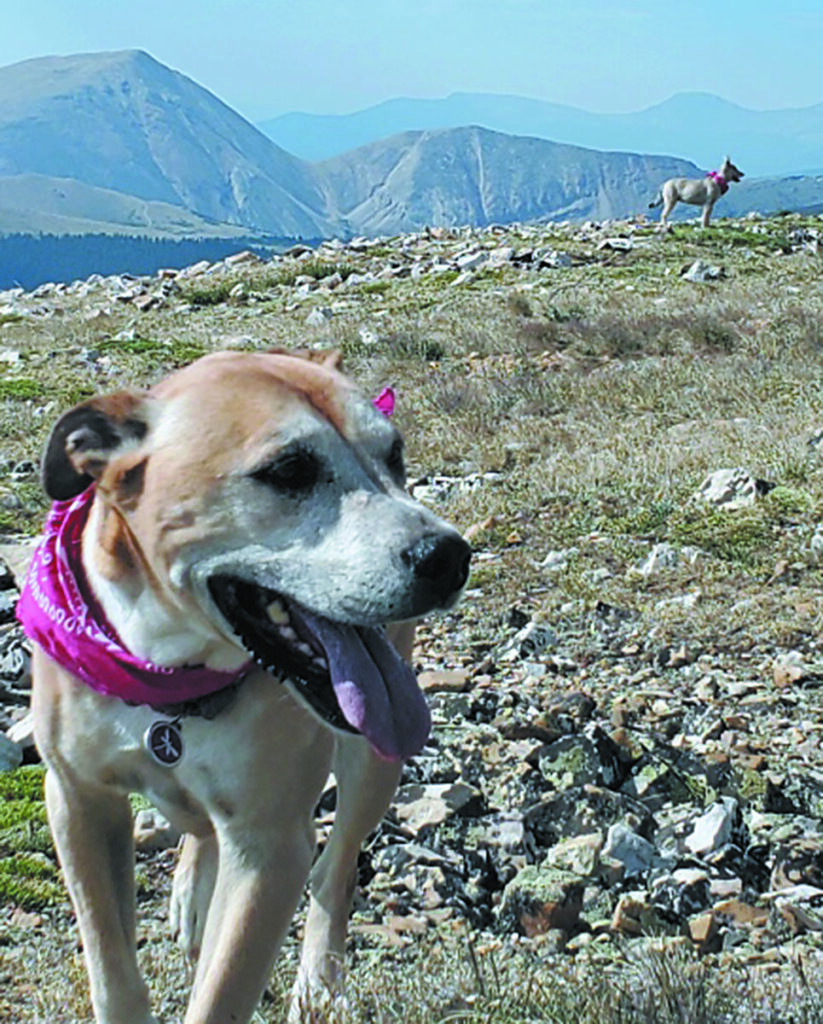
We crest the last false summit to find a peak marker surrounded by dozens of pika sirening the pups presence in all directions. We had just summited our first 13,000-foot mountain—an accident by all accounts, as we just rambled up a trail we happened upon while putsing about… just another feral Saturday for the pack.
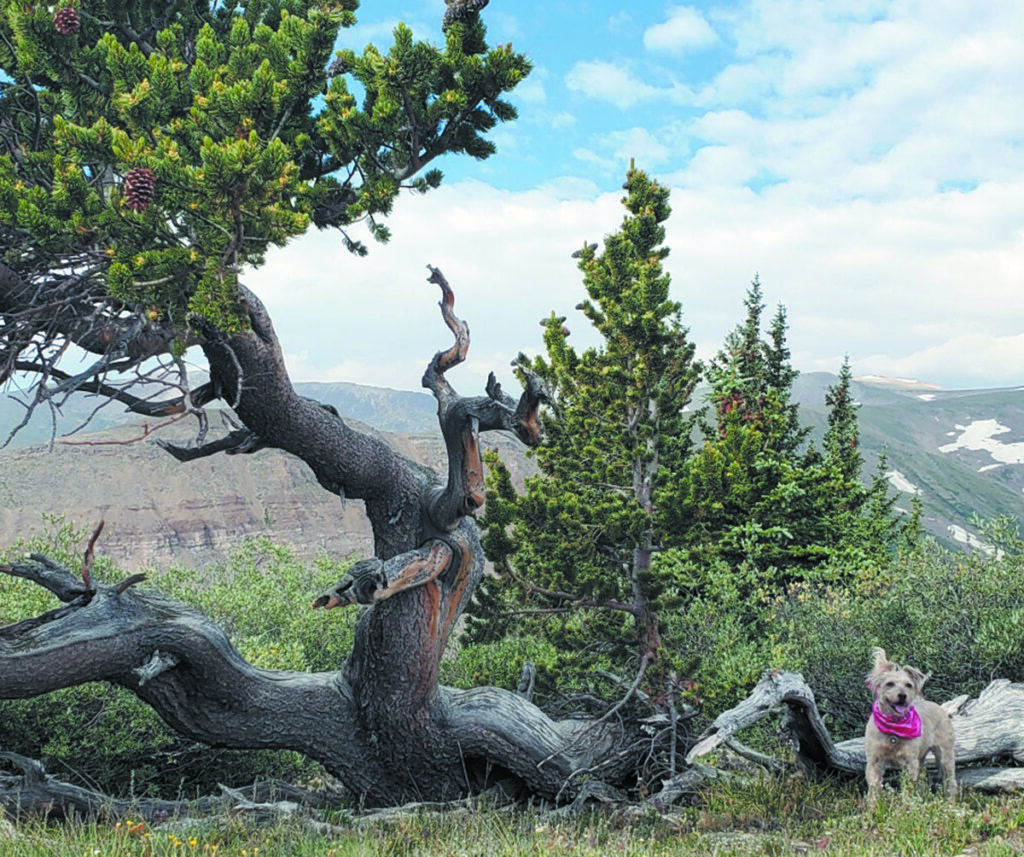
I attempt to wrangle the pack for the obligatory family photo, and we turn our backs to the wind, gingerly descending the steep hard-scrabble. The trail leads us through a grove of ancient Bristlecone Pines—the 2,000-year-old grandmothers, experts at adaptation to the high country, letting time and wind and sun shape their forms.
We weave in and out of their windswept bodies, basking in their grounded calm and stark beauty. We rest within them to catch our breath, letting our spleens recharge while admiring the pines’ view and envying their processes of photosynthesis.
Until next time,
Happy tails and happy trails!