
By Rita Thompson Tinsley
My earliest memory of a presidential funeral is the iconic cortege orchestrated exclusively for John Fitzgerald Kennedy (35th president of the United States).
On November 25, 1963, Kennedy’s funeral procession journeyed from the Capitol to St. Matthew’s Cathedral for the Requiem Mass, then on to Arlington National Cemetery. The horse-drawn caisson carried the flag-draped casket of the fallen American president and was surrounded by military soldiers. Following behind in the somber procession was a black, riderless horse with reversed boots in the stirrups.
A caisson is a traditional two-wheeled cart, a military vehicle once used to transport artillery ammunition. The riderless horse is a concept that dates back to the days of Genghis Khan where it symbolized a rider’s last journey; the reversed boots (toes pointing backwards) imply that the rider would behold one last glimpse of his family or his troops.
The riderless horse in Kennedy’s funeral procession was a wild child.
This black-as-coal Morgan/American Quarter Horse cross had a fiery spirit no one could contain. Black Jack was not rideable by most—though it was attempted many times—so he was led as a riderless horse through military processions with utmost caution by the handler de jour, as handlers were alternated.
The young soldier who led Black Jack during Kennedy’s funeral procession said the horse was quite a handful and impatient during the lengthy pauses in the procession. The handler shared that during one pause, Black Jack became so unruly that he stepped on the soldier’s foot, likely breaking his toe. But since the cameras were rolling, the soldier held his composure so as not to take away from the somber event.
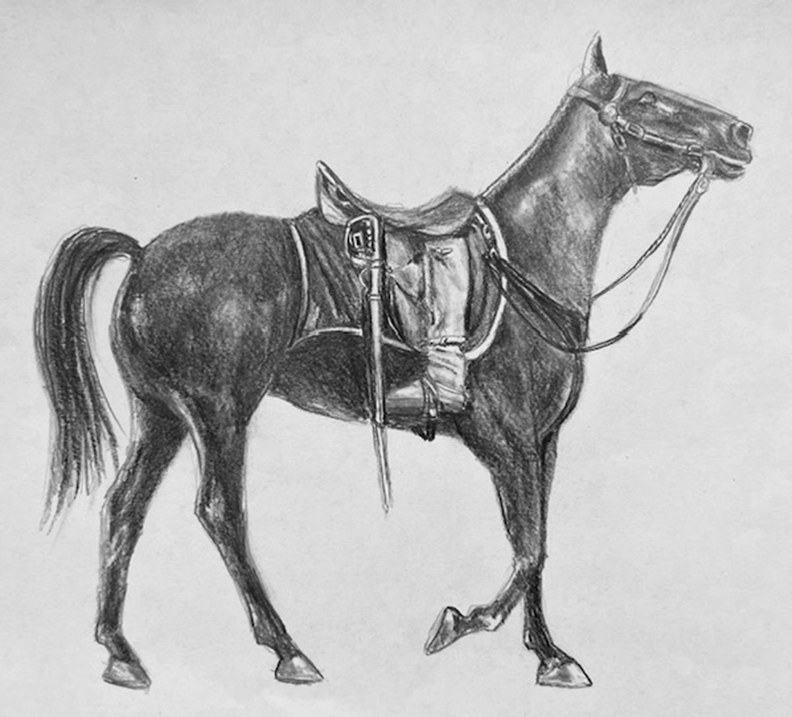
After Black Jack retired, he was purchased by Jacqueline Kennedy, along with his comparison (traditional riderless horse wardrobe) which included his saddle, bridle, saddle blanket, sword, boots and spurs.
The horse served in the caisson platoon as a riderless horse for more than a thousand military funerals. He lived to the age of 29, and it’s said that he never lost his fiery spirit. Black Jack was buried with military honors.
Abraham Lincoln was the first president to have a caparisoned horse as part of his funeral procession. The caparisoned horse is the riderless horse which is appropriately decorated to honor and pay tribute to a beloved fallen national hero or leader. Lincoln’s own horse, Old Bob, was draped in a black mourning blanket. The horse followed the funeral procession and led mourners to Lincoln’s burial spot.
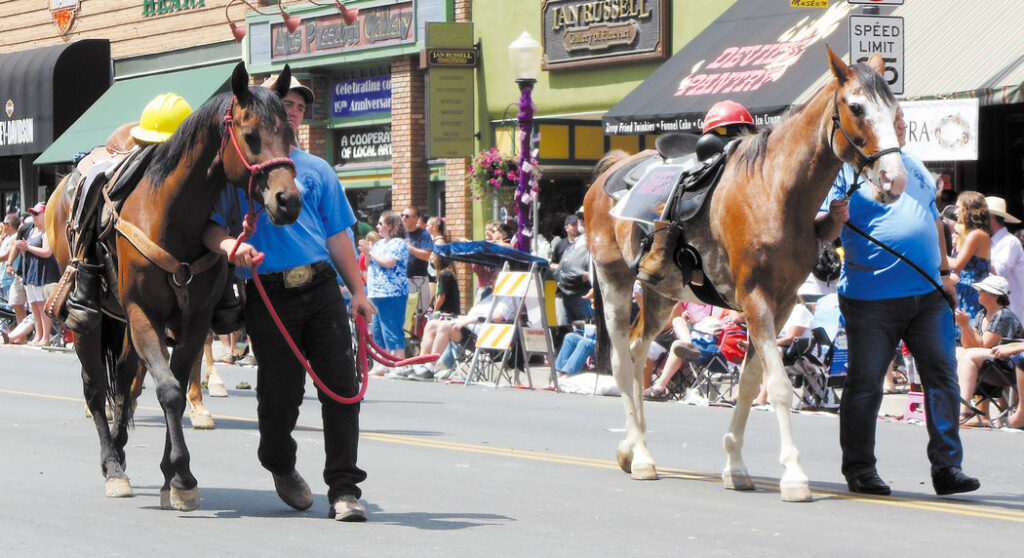
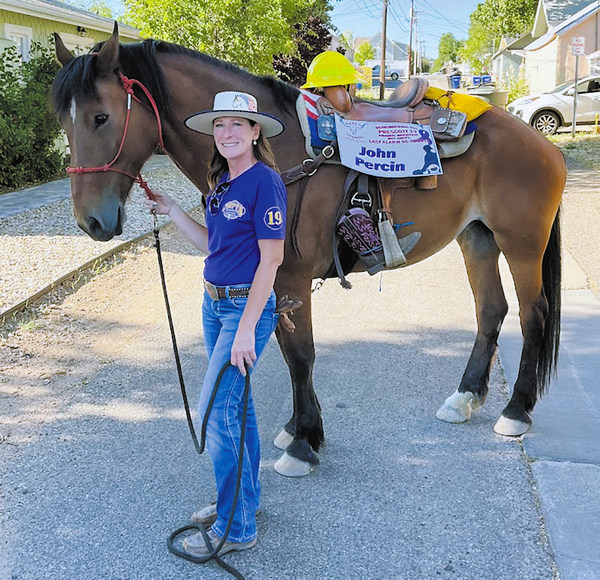
In the summer of 2013, Matt’s Saloon arranged for nineteen handlers to lead nineteen riderless horses in Prescott’s Frontier Rodeo Days Parade to honor our beloved fallen Granite Mountain Hotshots. Each saddle horn was donned with the wildland fire fighter’s helmet, and his name was proudly displayed on both sides of the saddle skirt. As one of the most heavily attended parades in the area, it was amazing to witness such quiet reverence from the massive crowd as they paid their respects.
The caisson-horse program has been on whoa for a period. But after a serious overhaul, the 3rd Infantry Regiment is bringing back the tradition by formally resuming military funeral services at Arlington National Cemetery.
Draft horses such as the Percheron are a preferred breed for the job of pulling a caisson because of their enormous build and passive demeanor. Plus, the Percheron adds a majestic presence to a cortege of grand importance.
On June 9, 2004, Reagan’s caisson horse-drawn casket, draped with the American flag, began its journey to the Capitol. Riderless horse Sergeant York—an American Standardbred—was in attendance on behalf of the US Army Caisson Platoon serving as the comparison horse.
What made this procession a step more significant is that Sergeant York had in his stirrups not just any boots in reverse. He had the original, personal riding boots of the equestrian and avid rider President Ronald Wilson Reagan.
Here’s to heroes and horses, and Commanders in Chief who are as comfortable in the White House as they are in their saddle.
Forever remembered.
